
Compliance

Regulatory risk, GDPR, EU AI Act, and why born-synthetic data is the compliant path for financial AI training and KYC/AML testing.

Real payment card blocked by PCI DSS 4.0 compliance gate — transformed into born-synthetic data card

PCI DSS 4.0 Bans Real Card Data in Test Environments — What Payment Processors Must Do Now

I watched a payment processor fail a PCI DSS assessment for one reason: they had production PANs in their staging environment. Not in a database dump — in their automated test suite. A developer had copied a batch of real card numbers years earlier to test a tokenization module. The module worked. The test data […]

PCI DSS 4.0 Bans Real Card Data in Test Environments — What Payment Processors Must Do Now Read Post »

Golden digital fortress withstanding simulated attack vectors during resilience testing

DORA Requires Synthetic Data for Resilience Testing — Here’s What That Means

I watched a team at a mid-size European bank prepare for their first ICT resilience test under DORA. They had the threat scenarios mapped, the recovery procedures documented, the incident response team briefed. Then someone asked: what data are we testing with? The room went quiet. They had been planning to use masked production data

DORA Requires Synthetic Data for Resilience Testing — Here’s What That Means Read Post »

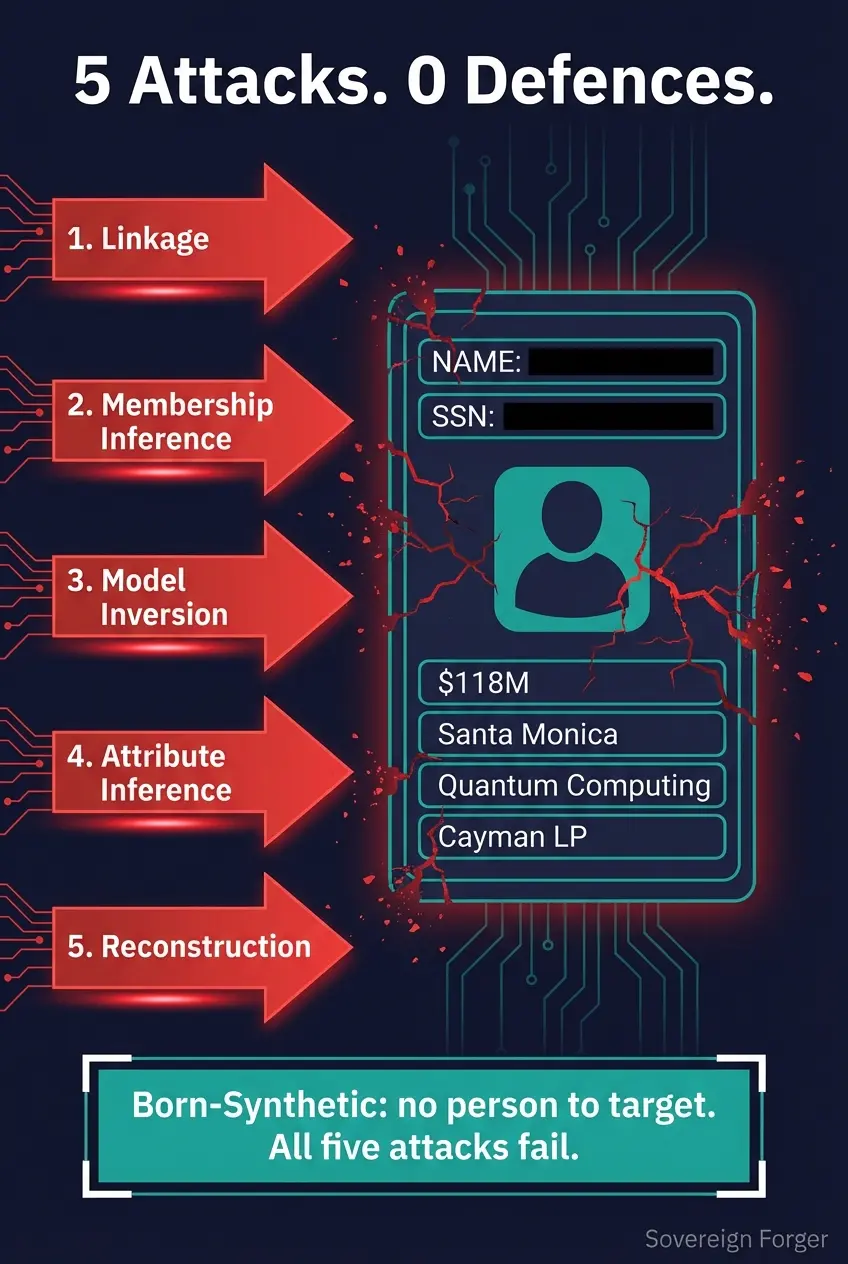
Five re-identification attack arrows converging on an anonymized UHNWI profile card — all five succeed because quasi-identifiers remain visible

The Five Re-Identification Attacks Your “Anonymized” Financial Data Cannot Survive

Key Takeaway: Anonymized financial data is vulnerable to five categories of re-identification attack — linkage, membership inference, model inversion, attribute inference, and reconstruction. For UHNWI profiles with their distinctive quasi-identifiers, all five succeed. Born-synthetic data is immune to all five because no real person exists to re-identify. Your anonymized dataset is protected by one assumption:

The Five Re-Identification Attacks Your “Anonymized” Financial Data Cannot Survive Read Post »

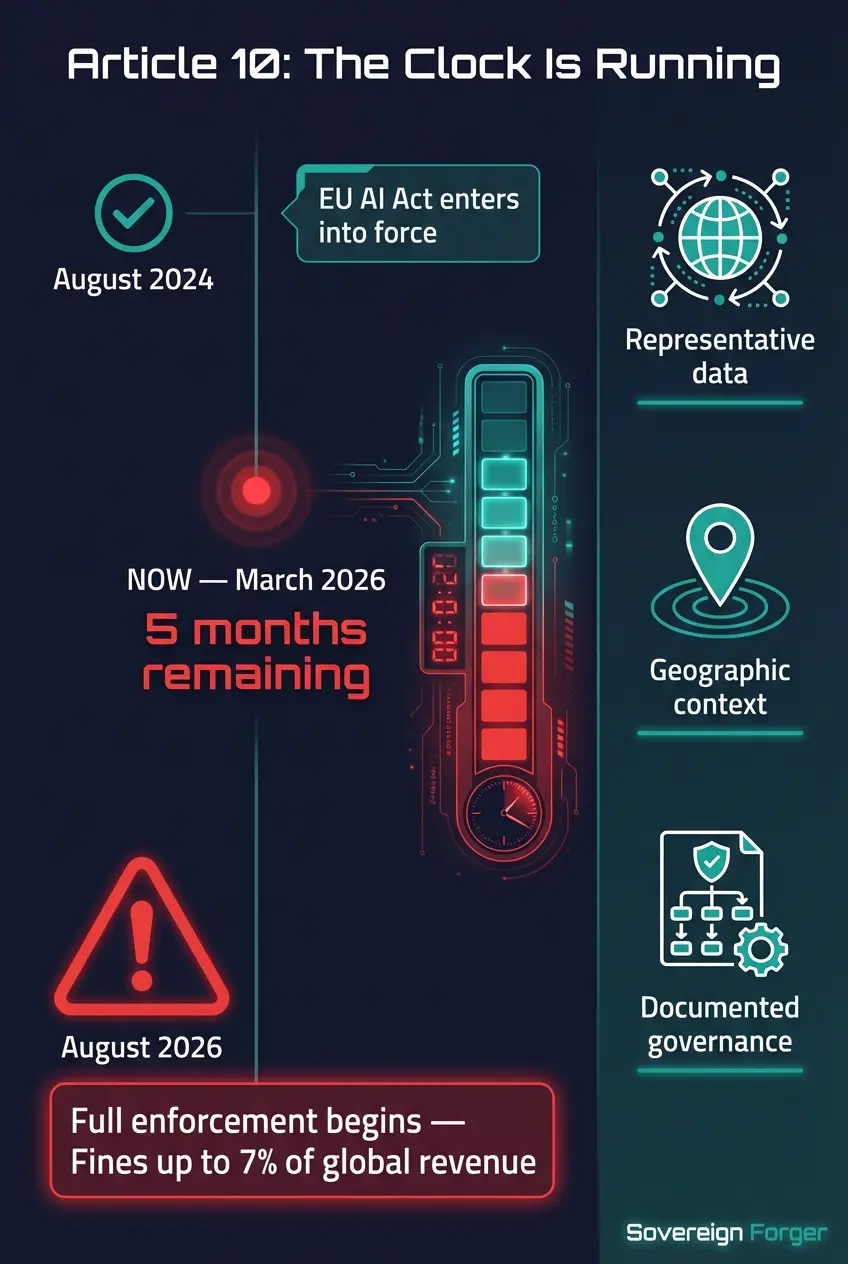
Timeline showing EU AI Act milestones from August 2024 entry into force to August 2026 full enforcement with 5 months remaining

EU AI Act Article 10: What Your AML Training Data Must Look Like by August 2026

Key Takeaway: The EU AI Act Article 10 requires governed, representative, and documented training data for all high-risk AI systems — including those used in financial services. Full enforcement begins August 2026 with fines up to 7% of global revenue. Born-synthetic data is the only approach that satisfies both Article 10 representativeness and GDPR data

EU AI Act Article 10: What Your AML Training Data Must Look Like by August 2026 Read Post »

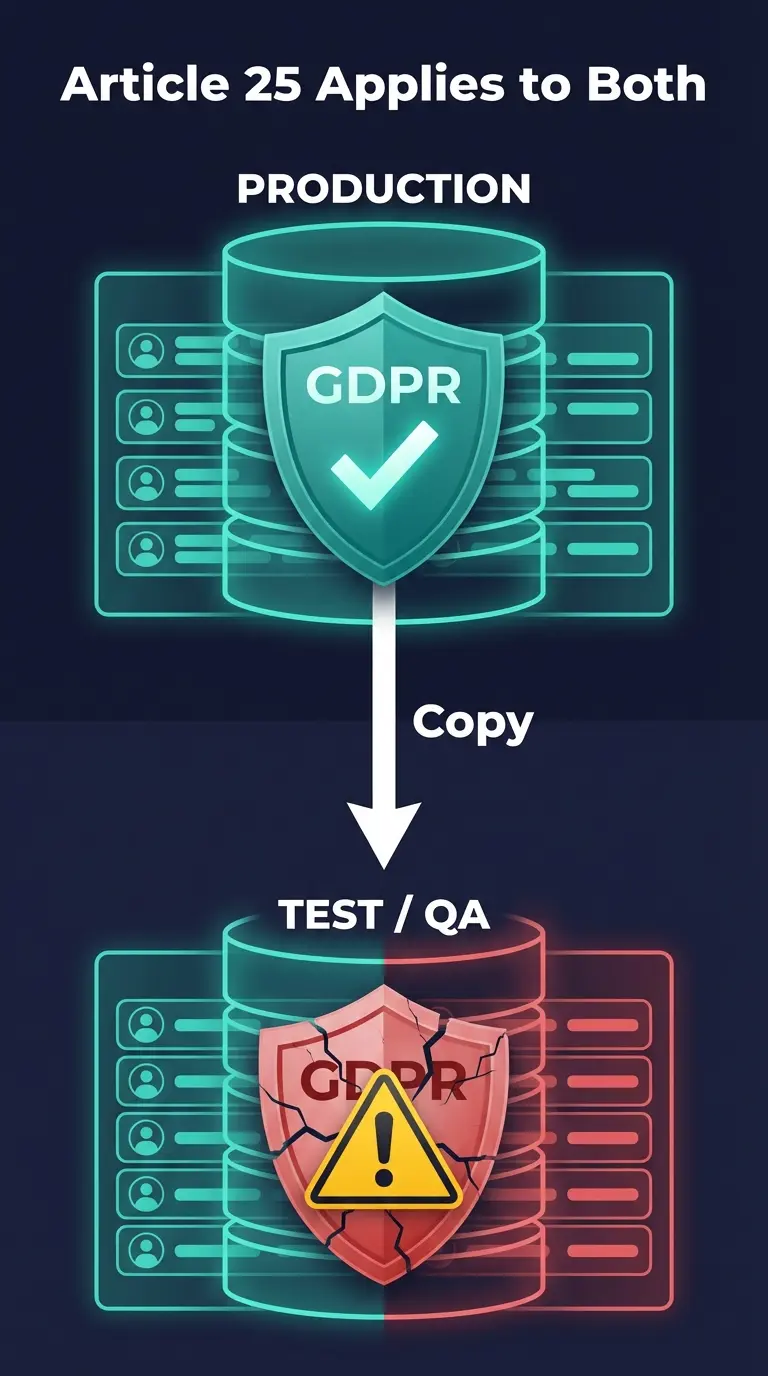
Two databases — Production protected by GDPR shield versus Test/QA with cracked shield — showing that Article 25 applies to both environments

Why GDPR Article 25 Means You Can’t Use Real Data in Test Environments

Key Takeaway: GDPR Article 25 applies to every environment where personal data is processed — including test, QA, and staging. Copying production data into test databases creates full GDPR liability. Born-synthetic data eliminates this risk entirely because no real person exists in the dataset. Nobody asks the obvious question: what data is running in your

Why GDPR Article 25 Means You Can’t Use Real Data in Test Environments Read Post »

Scroll to Top
Sovereign Forger on Product Hunt