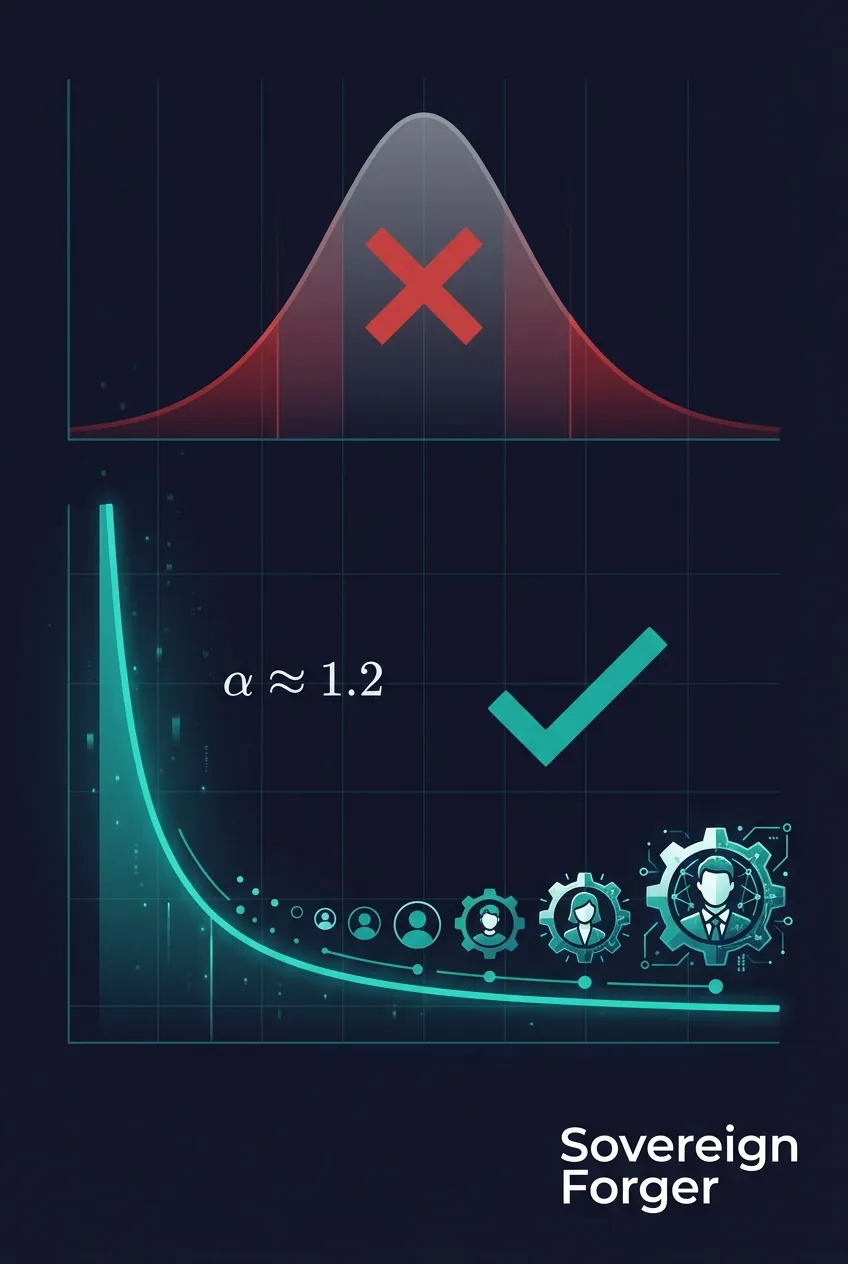
The Data Behind Wealth Intelligence

Technical deep dives on synthetic UHNWI data — from Pareto distributions to compliance-ready profiles for WealthTech and RegTech teams.

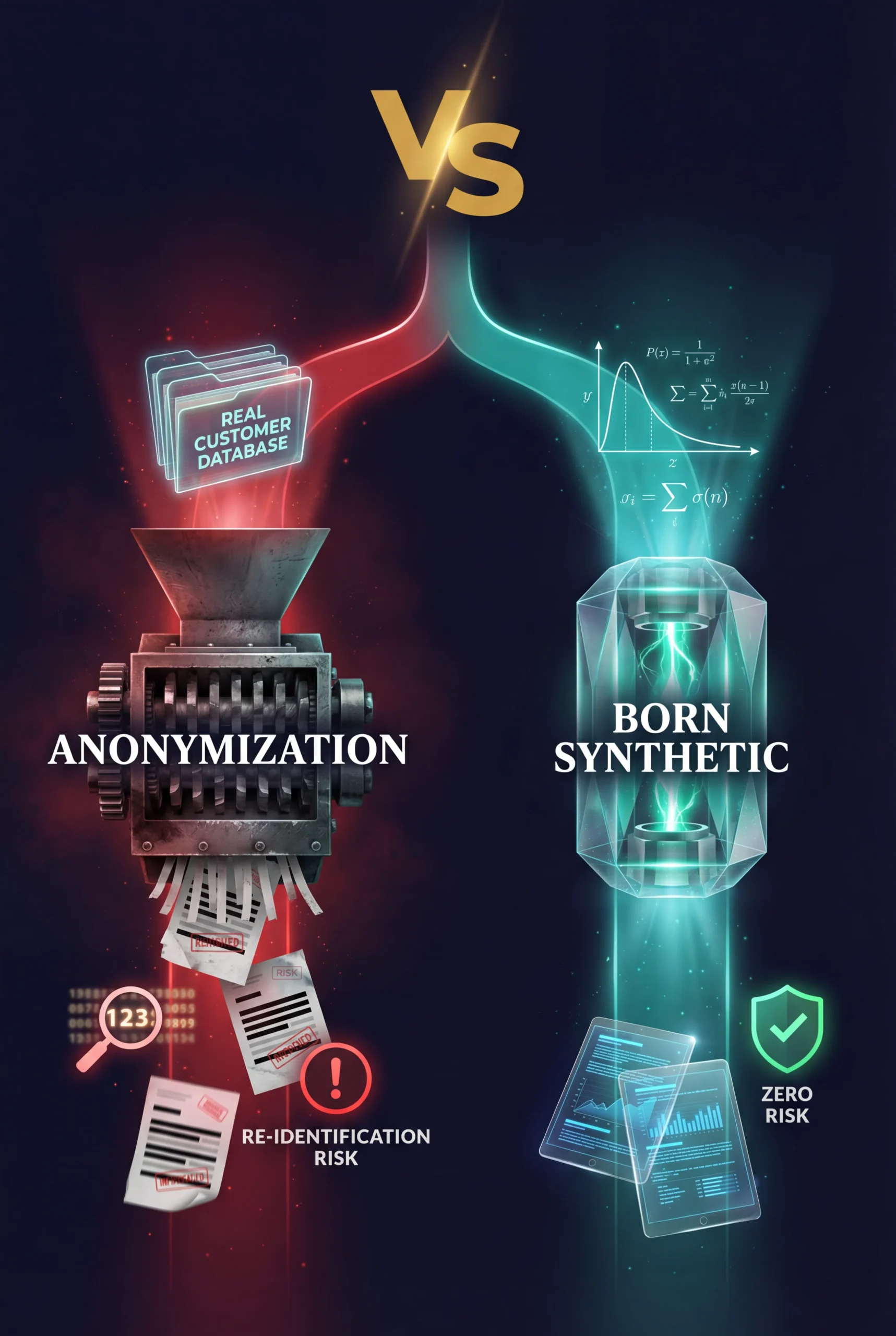
Two diverging paths — anonymization starts from real data with re-identification risk, born-synthetic starts from mathematics with zero privacy risk

Born Synthetic vs Data Anonymization — Why Starting From Zero Beats Starting From Real

I have had this conversation dozens of times. A compliance officer tells me: “We anonymize our data, so we’re covered.” Every time, I ask the same question: if your anonymization fails, what happens? The answer is always silence. Because they know. A single re-identification event doesn’t just create a GDPR fine — it destroys the […]

Born Synthetic vs Data Anonymization — Why Starting From Zero Beats Starting From Real Read Post »
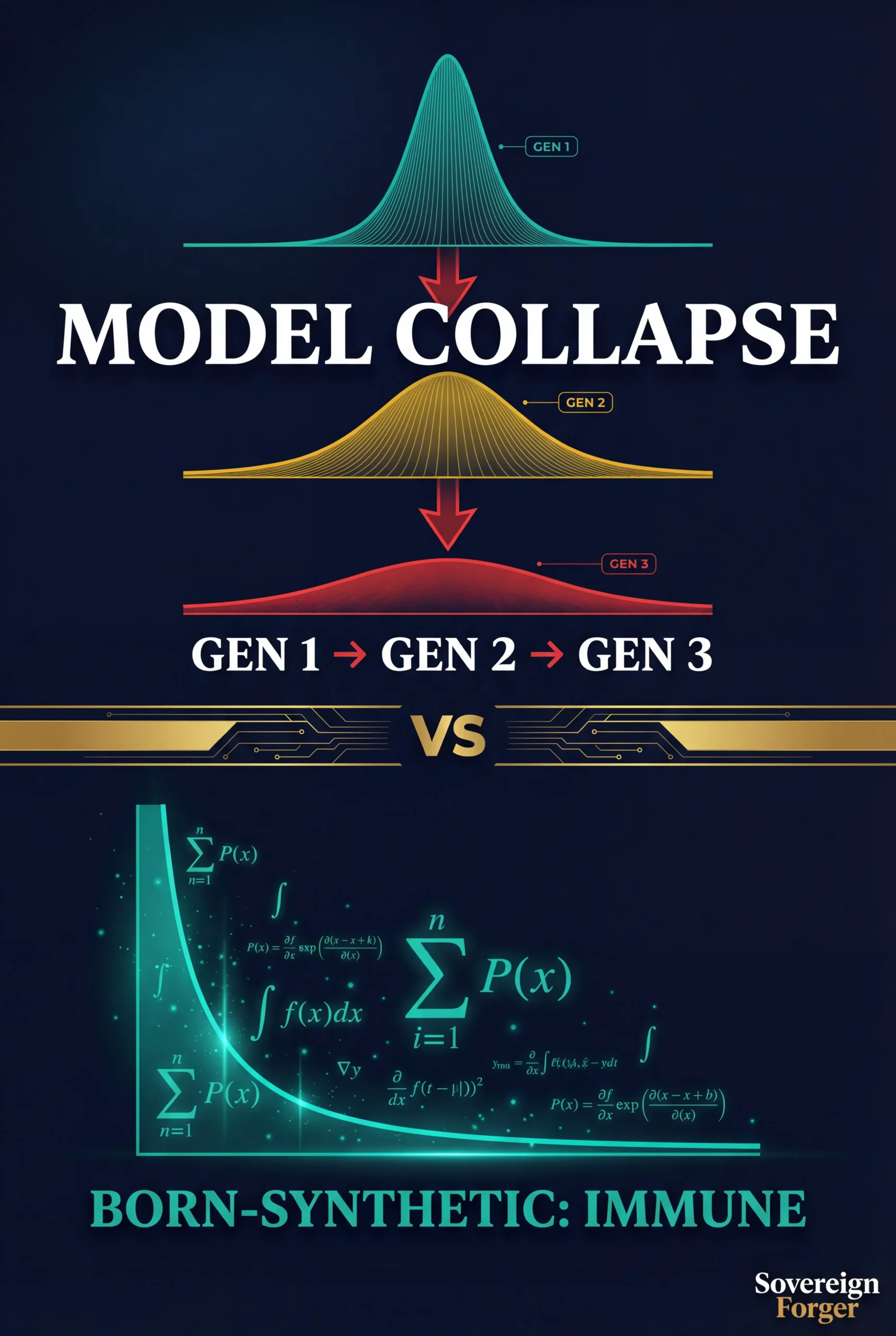
Model collapse spiral showing three generations of AI training degradation, with born-synthetic data breaking free as an immune alternative

Model Collapse Is Real — Here’s Why Born-Synthetic Data Is Immune

I build Born-Synthetic financial datasets from statistical distributions, not from AI output. When a paper published in Nature in 2024 confirmed that AI models degrade when trained on AI-generated data, it validated a design decision I had made from day one: the financial skeleton of every profile must come from mathematics, not from model inference.

Model Collapse Is Real — Here’s Why Born-Synthetic Data Is Immune Read Post »

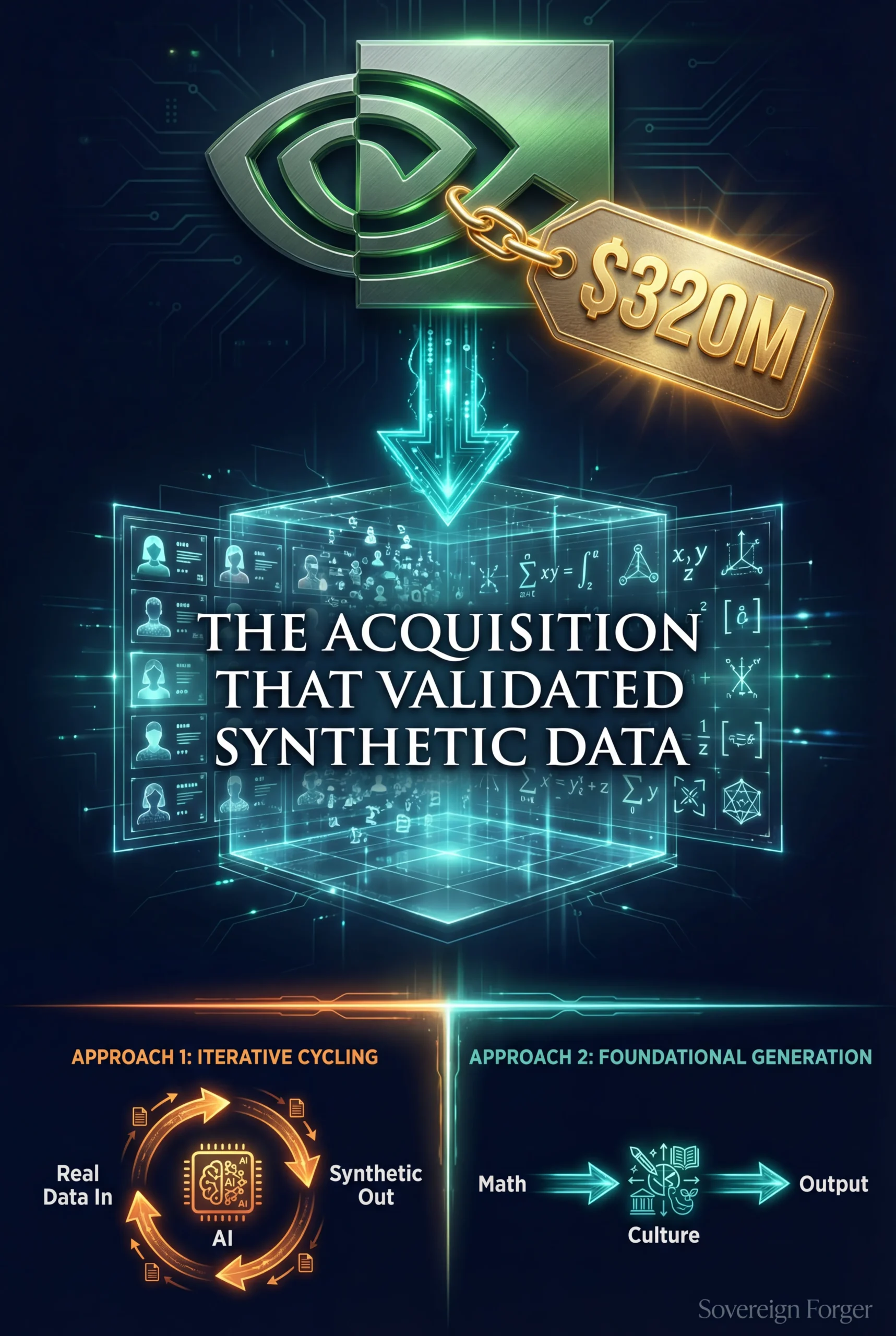
NVIDIA acquires Gretel for $320M — synthetic data market validation with growth projection from $635M to $4-8B

Why NVIDIA Paid $320M for Synthetic Data (And What It Means for the Market)

In March 2025, NVIDIA acquired Gretel.ai for more than $320 million. I remember the announcement and thinking: this changes everything for anyone building in the synthetic data space. Not because NVIDIA bought a competitor. Gretel and I solve different problems. But because when the world’s largest GPU company pays 5x the total funding of a

Why NVIDIA Paid $320M for Synthetic Data (And What It Means for the Market) Read Post »

Real payment card blocked by PCI DSS 4.0 compliance gate — transformed into born-synthetic data card

PCI DSS 4.0 Bans Real Card Data in Test Environments — What Payment Processors Must Do Now

I watched a payment processor fail a PCI DSS assessment for one reason: they had production PANs in their staging environment. Not in a database dump — in their automated test suite. A developer had copied a batch of real card numbers years earlier to test a tokenization module. The module worked. The test data

PCI DSS 4.0 Bans Real Card Data in Test Environments — What Payment Processors Must Do Now Read Post »

Golden digital fortress withstanding simulated attack vectors during resilience testing

DORA Requires Synthetic Data for Resilience Testing — Here’s What That Means

I watched a team at a mid-size European bank prepare for their first ICT resilience test under DORA. They had the threat scenarios mapped, the recovery procedures documented, the incident response team briefed. Then someone asked: what data are we testing with? The room went quiet. They had been planning to use masked production data

DORA Requires Synthetic Data for Resilience Testing — Here’s What That Means Read Post »

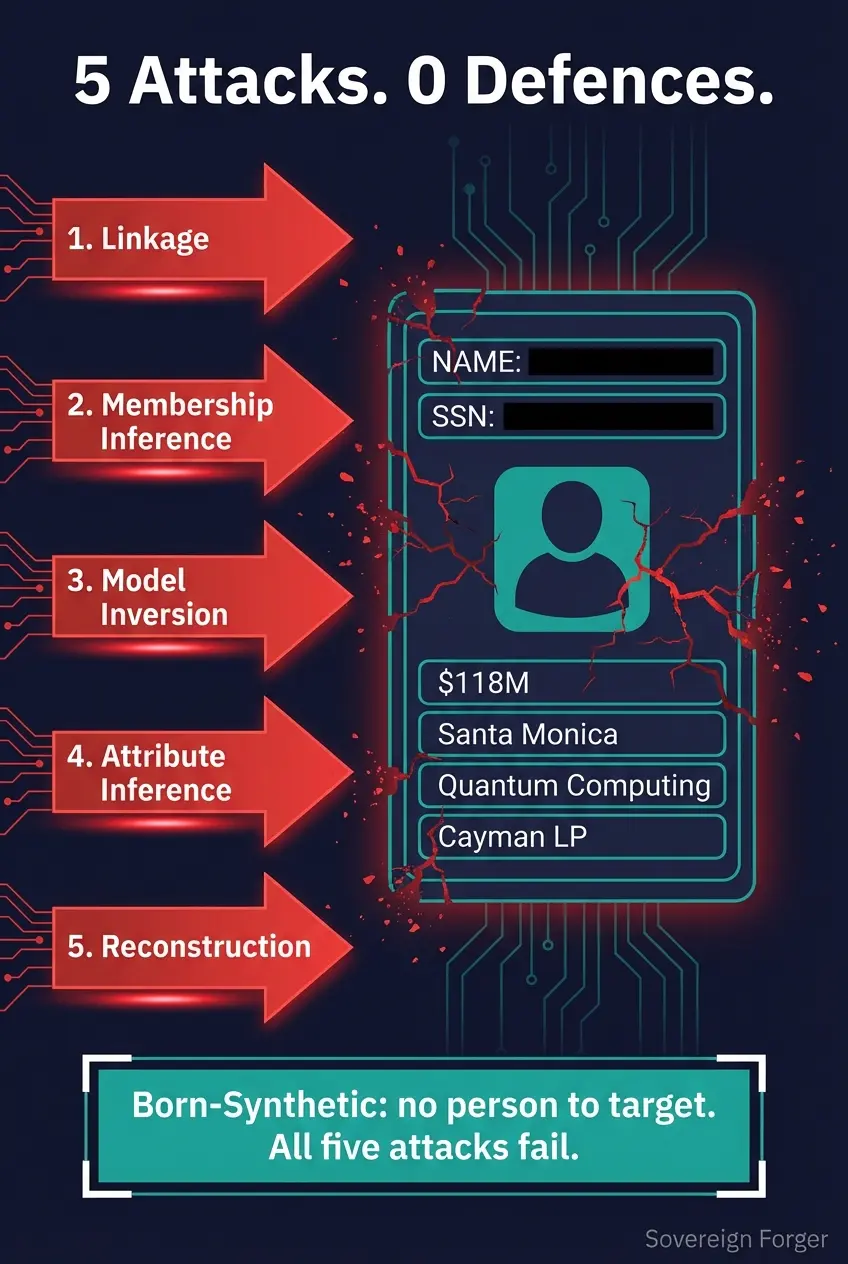
Five re-identification attack arrows converging on an anonymized UHNWI profile card — all five succeed because quasi-identifiers remain visible

The Five Re-Identification Attacks Your “Anonymized” Financial Data Cannot Survive

Key Takeaway: Anonymized financial data is vulnerable to five categories of re-identification attack — linkage, membership inference, model inversion, attribute inference, and reconstruction. For UHNWI profiles with their distinctive quasi-identifiers, all five succeed. Born-synthetic data is immune to all five because no real person exists to re-identify. Your anonymized dataset is protected by one assumption:

The Five Re-Identification Attacks Your “Anonymized” Financial Data Cannot Survive Read Post »

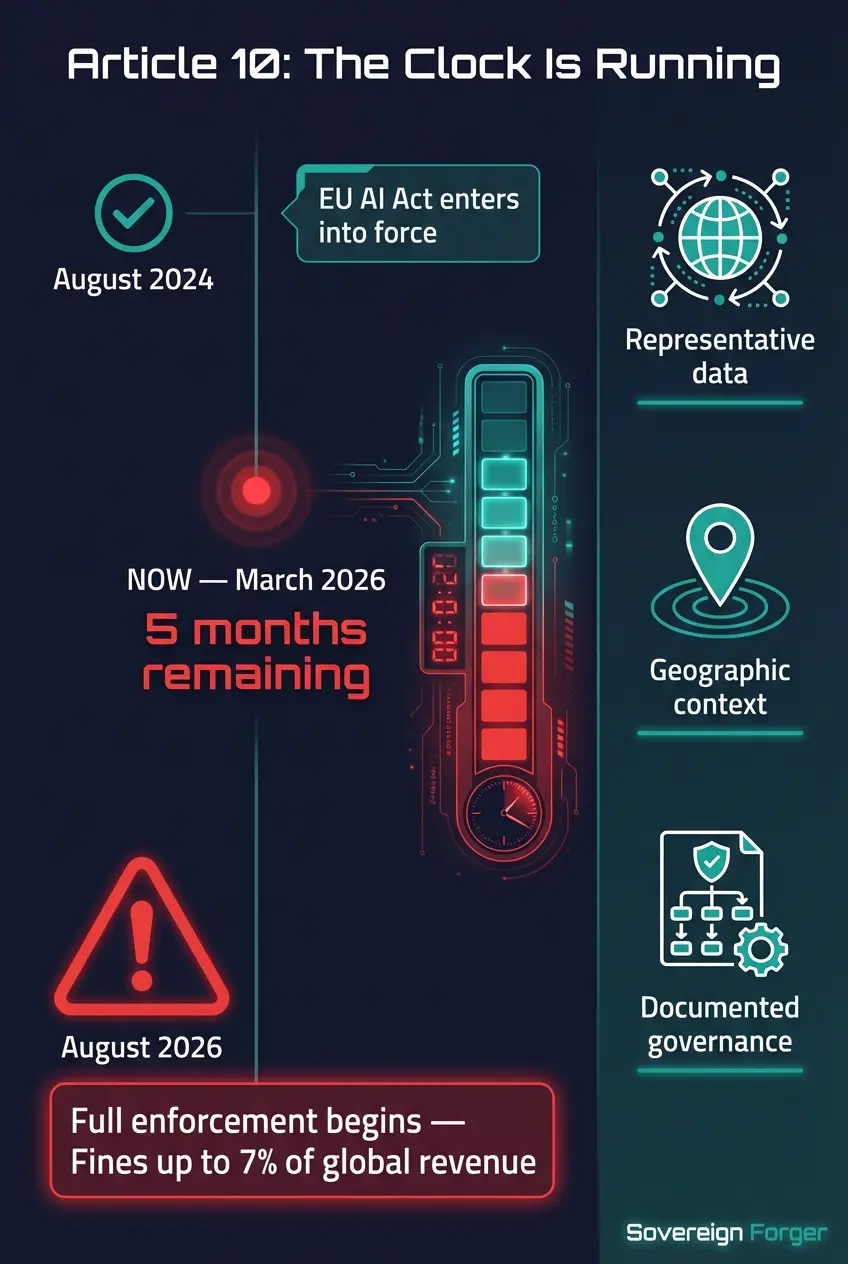
Timeline showing EU AI Act milestones from August 2024 entry into force to August 2026 full enforcement with 5 months remaining

EU AI Act Article 10: What Your AML Training Data Must Look Like by August 2026

Key Takeaway: The EU AI Act Article 10 requires governed, representative, and documented training data for all high-risk AI systems — including those used in financial services. Full enforcement begins August 2026 with fines up to 7% of global revenue. Born-synthetic data is the only approach that satisfies both Article 10 representativeness and GDPR data

EU AI Act Article 10: What Your AML Training Data Must Look Like by August 2026 Read Post »

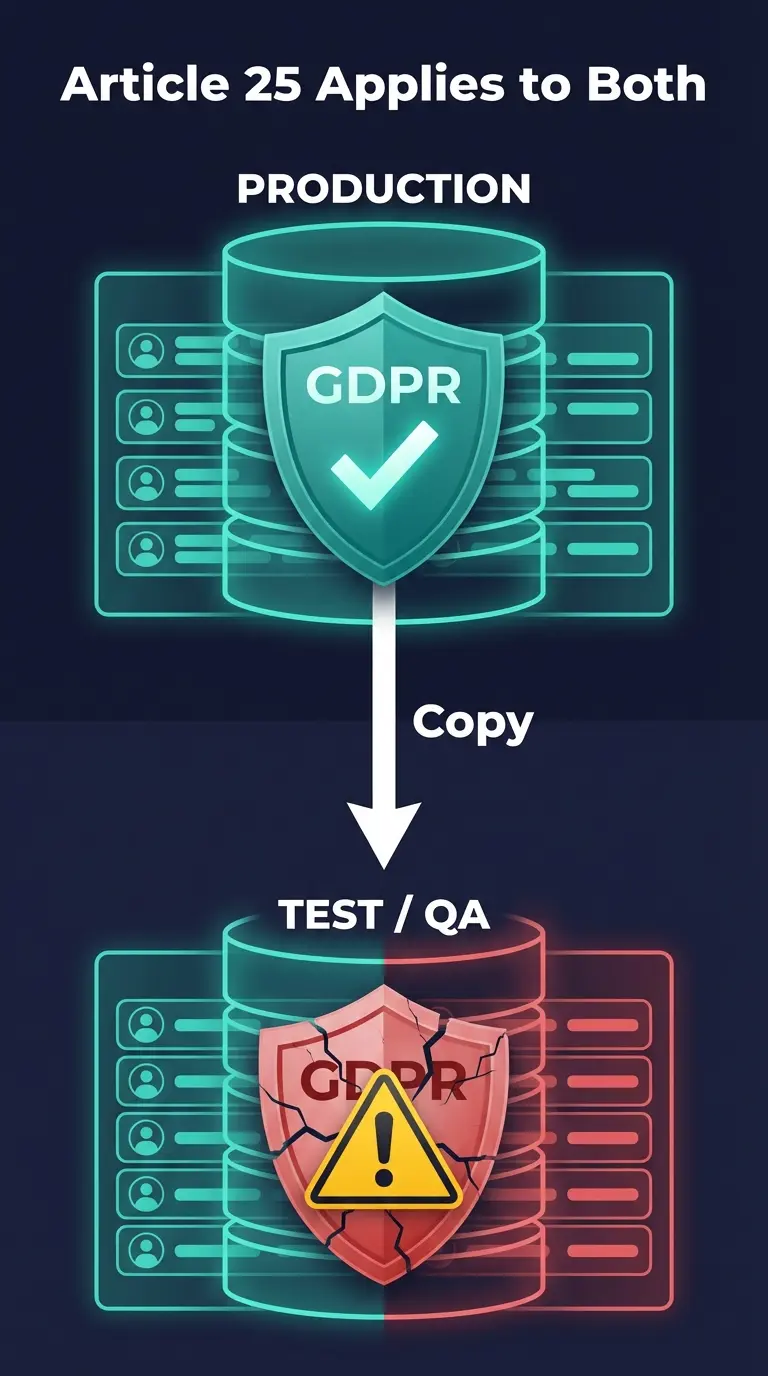
Two databases — Production protected by GDPR shield versus Test/QA with cracked shield — showing that Article 25 applies to both environments

Why GDPR Article 25 Means You Can’t Use Real Data in Test Environments

Key Takeaway: GDPR Article 25 applies to every environment where personal data is processed — including test, QA, and staging. Copying production data into test databases creates full GDPR liability. Born-synthetic data eliminates this risk entirely because no real person exists in the dataset. Nobody asks the obvious question: what data is running in your

Why GDPR Article 25 Means You Can’t Use Real Data in Test Environments Read Post »

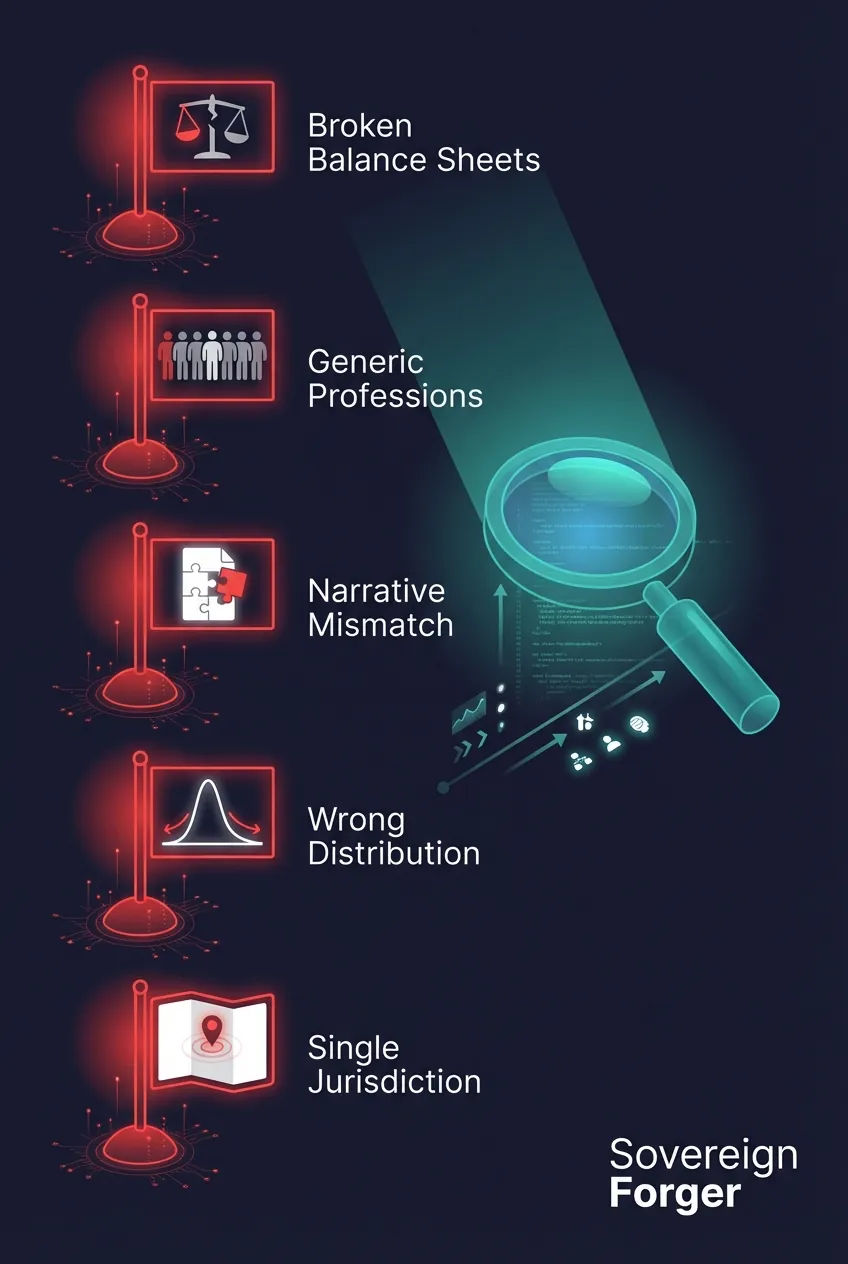
Five red flag warning icons for evaluating synthetic UHNWI data — broken balance sheets, generic professions, narrative mismatch, bell curve distribution, and single jurisdiction

Five Red Flags in Your Synthetic Data Provider’s Sample File

I have audited sample files from every major synthetic data provider in the financial space. Five checks, sixty seconds each. Most fail at least three. A five-minute audit of any sample file will tell you whether the provider understands UHNWI data — or is simply generating plausible-looking numbers with no structural integrity. Here are the

Five Red Flags in Your Synthetic Data Provider’s Sample File Read Post »

Scroll to Top
Sovereign Forger on Product Hunt